


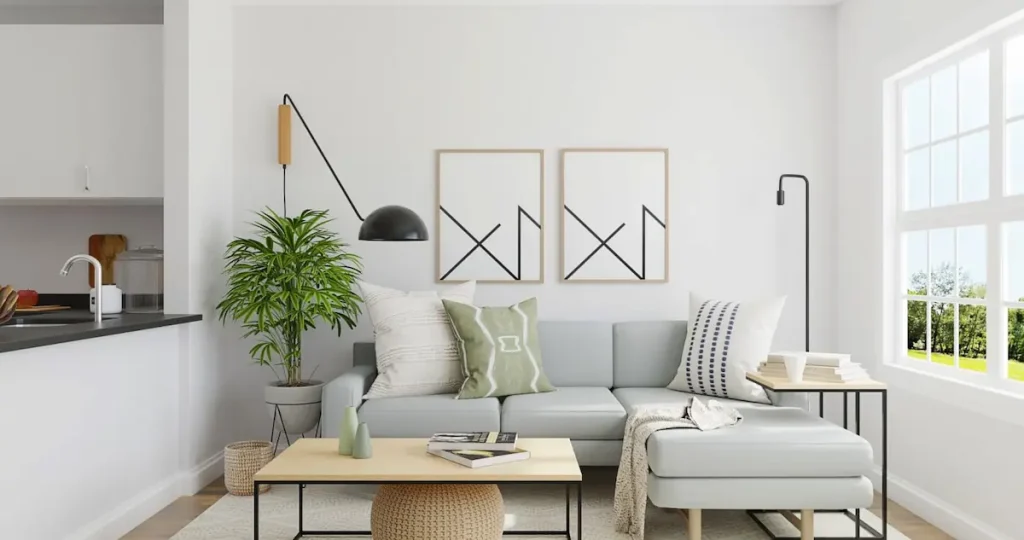
A small living room is not a failed living room. Some of the most inviting, characterful sitting rooms are compact — what they share is intention. Every piece earns its place, light is treated like a material, and the layout respects how people actually sit, talk and relax. Whether you are furnishing a city flat, a cottage or the one multipurpose room of a studio, these small living room ideas will help the space feel bigger than its measurements without knocking down a single wall.
Plan the Layout Around Conversation
The most common mistake in a small room is pushing all the furniture against the walls, which creates a waiting-room corridor in the middle and somehow makes the space feel smaller. Instead, group seating around a focal point — a rug, a low table, the fireplace or the view — and let the backs of pieces define the zone. A loveseat plus two light armchairs usually works better than one deep L-shaped sofa that dominates the floor plan, and chairs you can move beat fixed bulk for a room that must host both quiet evenings and guests. Keep walkways clear and visual lines open: furniture on legs, rather than skirts to the floor, lets light pass underneath and shows more floor, which the brain reads as more space. Among small living room ideas, layout is the one that costs nothing, so experiment before you buy anything — tape the footprint of candidate pieces on the floor and live with the outline for a day.
Colour and Light: The Space Expanders
Light colours on walls reflect light and recede visually, which is why they anchor most small living room ideas — but the execution matters more than the shade name. Paint walls, skirting and ceiling in harmonious pale tones so boundaries blur, and keep the palette limited: a calm base, one accent colour, and natural textures. Then layer lighting at three heights — a ceiling or pendant light, wall or table lamps at seated eye level, and a low glow from a floor lamp or candles — because a single overhead light flattens a small room into a box, while layered light gives it depth and evening warmth. Mirrors are the classic trick and they work, placed to bounce a window’s light or reflect a view rather than a blank wall. Sheer curtains hung high and wide make windows — and therefore the room — feel grander, and they cost less than almost any furniture change.
Furniture That Works Twice
In a compact room, single-purpose furniture is a luxury. Favour pieces that store, fold, nest or move: an ottoman with a lift-up lid that swallows blankets and serves as coffee table, footrest and extra seat; nesting side tables that spread out for guests and tuck away after; a slim console behind the sofa holding lamps and books instead of a bulky unit; a fold-down or extendable table for the dining corner. Scale matters more than quantity: choose sofas with slim arms and raised legs, armless chairs where possible, and one generous comfortable piece rather than four cramped ones. Glass or acrylic tables keep sightlines open in the centre of the room. This multifunctional logic is the same value thinking we apply when reviewing any home decision — compare total usefulness, not sticker appeal, as we do in our features and pricing comparison guides: in small rooms, the best piece is the one doing three jobs gracefully.
Storage That Disappears
Clutter shrinks a room faster than walls do, so storage must be designed to vanish. Built-in or wall-to-wall shelving painted the same colour as the wall reads as architecture rather than furniture, and vertical storage — full-height shelves, hooks and cabinets — uses the cubic volume small rooms waste. Closed storage beats open for calm: baskets and boxes on shelves, cabinets instead of display for the everyday mess, and a designated home for remotes, chargers and magazines, which are the small items that make surfaces look chaotic. Keep display editing strict: a few loved objects with breathing room look intentional; everything you own on show looks like storage overflow. If you are researching your next home move alongside decorating, our guides to navigating big decisions safely and our property coverage can help you judge which spaces will actually live well at small sizes.
Texture, Pattern and the Finishing Layer
When colour must stay quiet, texture does the decorating. Layer a woven rug over hard floors, linen or wool throws on the sofa, cushions in two or three fabrics within your palette, and one natural material — wood, rattan, stone — to warm the scheme. Pattern belongs in small rooms too, in controlled doses: one patterned cushion set, a rug with a subtle design, or wallpaper on a single feature wall or inside an alcove. Plants finish the room disproportionately well: a single tall plant in a corner adds height and life without consuming seating space, and trailing plants on shelves soften hard lines. Keep window sills and the tops of units mostly clear — the eye rests on calm surfaces and reads the room as larger. These finishing small living room ideas are where personality lives, so let them be yours: the framed print, the inherited lamp, the books you actually read.
Small Rooms, Rental Rules
Renters can use nearly all of this without touching a drill. Lean tall shelving rather than fixing it, use tension rods and over-door hooks, swap heavy curtains for sheers on the existing rail, and let lighting do the work that paint cannot — most landlords accept a lick of the same colour at the end of a tenancy, but you rarely need it when lamps, mirrors and textiles are doing their jobs. Photograph the room before you move furniture, keep the pieces you buy standard-sized enough to fit your next home too, and remember that in a rental, the most valuable small-room skill is editing: the fewer, better things you own, the larger every future room will feel the day you move in.
Conclusion
The small living room ideas that work are really one idea in several forms: be deliberate. Layout for conversation, colour and light for depth, furniture that multitasks, storage that disappears, and texture instead of clutter. A compact room treated this way stops apologising for its size and starts doing what living rooms are for — holding your life comfortably, and looking good while it does it.


